



Tudor Watches, officially known as Montres Tudor SA, stands today as one of the most dynamic and respected brands in the luxury watch industry. Founded in 1926 by Hans Wilsdorf, the visionary behind Rolex, Tudor was conceived as a brand that would offer the reliability and prestige of its elder sibling at a more accessible price point. Over nearly a century, Tudor has evolved from a pragmatic alternative to Rolex into a brand with its own distinct identity, celebrated for its technical innovations, iconic design language, and robust tool watches. This article provides an in-depth exploration of Tudor’s history, key milestones, signature models, and the brand’s enduring relationship with Rolex, while highlighting the innovations and philosophies that have shaped its unique position in the world of horology.
Founding and Early History of Tudor (1926–1949)
Hans Wilsdorf’s Vision and the Birth of Tudor
Hans Wilsdorf, already renowned for establishing Rolex, recognized early on that there was a market for watches that could deliver Rolex’s famed dependability at a more modest price. As he stated, “For some years now, I have been considering the idea of making a watch that our agents could sell at a more modest price than our Rolex watches, and yet one that would attain the standard of dependability for which Rolex is famous”. This vision led to the registration of the Tudor trademark in 1926 by the Swiss watchmaking company Veuve de Philippe Hüther on Wilsdorf’s behalf.
By 1936, Wilsdorf had taken direct control of the Tudor brand, and in 1946, he formally established Montres Tudor SA in Geneva, Switzerland. The new company specialized in watches for both men and women, with Rolex guaranteeing the technical, aesthetic, and functional characteristics, as well as distribution and after-sales service.
Early Models and Branding
The first Tudor watches, produced in the late 1920s and 1930s, bore a distinctive “TUDOR” signature on the dial, sometimes accompanied by the Rolex name. The brand’s logo evolved from a Gothic script with a shield and Tudor rose—symbolizing the English Tudor dynasty—to a more streamlined rose emblem, and eventually to the shield alone, reflecting the brand’s growing focus on durability and robustness.
Tudor’s early offerings were primarily rectangular or barrel-shaped watches, with the Australian market playing a significant role in the brand’s initial expansion. These watches were distributed exclusively through the Willis company, which supplied them to leading
Tudor’s Relationship with Rolex: Shared DNA and Divergence
The “Affordable Quality” Strategy
From its inception, Tudor was positioned as a more accessible alternative to Rolex, leveraging the latter’s technical innovations and manufacturing prowess. Early Tudor watches were equipped with reliable, off-the-shelf movements—primarily from ETA and Fleurier—housed in Rolex cases and paired with Rolex bracelets. This allowed Tudor to offer watches that mirrored the quality and dependability of Rolex while achieving a lower price point.
Shared Components and Technical Innovations
Tudor’s use of the Rolex Oyster case—a groundbreaking waterproof design introduced by Rolex in 1926—was a defining feature of its early tool watches. The Oyster case, with its screw-down crown and caseback, provided exceptional protection against dust, moisture, and pressure, making it ideal for both everyday wear and professional use.
The synergy between the two brands extended to other components as well. For decades, Tudor watches featured Rolex-signed crowns, casebacks, and bracelets, further reinforcing the connection between the two marques. However, as Tudor matured, it began to develop its own design language and technical features, gradually establishing a distinct identity.
Divergence and the Rise of Tudor’s Independence
While Tudor benefited from its association with Rolex, it also faced the challenge of being perceived as a “poor man’s Rolex.” The brand’s resurgence in the 21st century, marked by the introduction of in-house movements and bold design choices, has helped Tudor emerge from Rolex’s shadow and assert itself as a formidable player in the luxury watch market.
For a comprehensive comparison of Tudor and Rolex, including shared components, design philosophies, and market positioning, see Teddy Baldassarre’s in-depth analysis and Gear Patrol’s feature.
The Development of the Oyster Case and Early Tool Watches
The Oyster Prince and the Advent of Self-Winding Watches
In 1952, Tudor launched the Oyster Prince, its first self-winding model, which utilized a Rolex self-winding mechanism. This model was notable not only for its technical innovation but also for its role in high-profile endurance tests and expeditions. Twenty-six Tudor Oyster Princes accompanied the British North Greenland Expedition of 1952–1954, enduring extreme Arctic conditions and cementing Tudor’s reputation for reliability.
The Oyster Case: A Foundation for Tool Watches
The adoption of the Oyster case was pivotal in Tudor’s evolution into a producer of robust tool watches. The case’s waterproof construction, combined with the self-winding rotor, enabled Tudor to create watches suitable for demanding environments, from construction sites to naval operations.
Early Advertising and Market Positioning
Tudor’s early advertising campaigns emphasized the durability and dependability of its watches, often featuring real-life professionals—such as miners, divers, and engineers—subjecting their watches to grueling tests. This focus on practical utility and resilience helped establish Tudor’s identity as a maker of honest, hardworking timepieces.
The Tudor Submariner: Evolution and Military Use
The Birth of the Tudor Submariner

In 1954, Tudor introduced its first diving watch, the Oyster Prince Submariner (reference 7922), which was water-resistant to 100 meters. This model closely mirrored the Rolex Submariner, sharing the iconic Oyster case and many design elements, but was powered by a modified ETA automatic movement.
Key Milestones in the Submariner Line
- 1958 (Reference 7924 “Big Crown”): Water resistance increased to 200 meters, and the watch featured an oversized 8mm crown for improved usability underwater.
- 1959 (Reference 7928): Introduction of crown guards, enhancing the watch’s durability and appeal to professional divers.
- 1969 (References 7016 and 7021 “Snowflake”): Debut of the distinctive square hour markers and angular “Snowflake” hands, designed for maximum legibility in low-light conditions—a feature developed in collaboration with the French Navy (Marine Nationale).
Military and Professional Partnerships
Tudor’s Submariner quickly gained favor with military and professional diving organizations. From the 1960s to the 1980s, the French Marine Nationale and the US Navy SEALs issued Tudor Submariners to their divers, often supplied without bracelets to accommodate military-issued straps. These watches were prized for their robustness, reliability, and legibility, and many were engraved with military markings, making them highly sought after by collectors today.
The “Snowflake” Submariner: An Iconic Design
The introduction of the “Snowflake” hands and square markers in 1969 marked a turning point in Tudor’s design language. These features not only enhanced legibility but also set Tudor apart from Rolex, establishing a visual identity that endures in the brand’s modern collections.
For an in-depth guide to the Tudor “Snowflake” Submariner, see Exquisite Timepieces’ article.
Signature Models: Black Bay, Pelagos, and Black Bay Fifty-Eight
The Black Bay: A Modern Classic

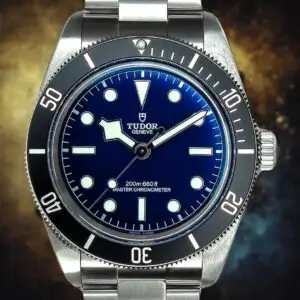
Launched in 2012, the Tudor Black Bay collection has become the brand’s flagship line, blending vintage-inspired design with modern reliability. Drawing on elements from Tudor’s historic dive watches, the Black Bay features the iconic “Snowflake” hands, domed sapphire crystal, and a variety of case sizes and materials.
Key Variants and Milestones
- Black Bay 41mm (2012): The original Heritage Black Bay debuted with a burgundy bezel, gilt dial, and ETA movement. It won the “Revival” prize at the 2013 Grand Prix d’Horlogerie de Genève, cementing its status as a modern icon.
- Black Bay Blue and Black (2014–2015): New colorways expanded the collection, with the blue bezel paying homage to the Marine Nationale models.
- In-House Movements (2016): Introduction of the MT5602 manufacture caliber, offering a 70-hour power reserve, COSC certification, and enhanced robustness.
- Black Bay Fifty-Eight (2018): A 39mm model inspired by the 1958 Submariner, featuring a slimmer profile and vintage proportions. The Fifty-Eight has become one of the most popular and collectible modern Tudors.
- Black Bay GMT, Chrono, and Bronze: The collection has grown to include GMT complications, chronographs (with movements developed in partnership with Breitling), and models in bronze, silver, and gold.
Design Language and Signature Elements
The Black Bay’s design is a curated homage to Tudor’s past, incorporating the “Snowflake” hands, oversized crown, and domed crystal. The line’s versatility is reflected in its wide range of sizes, materials, and complications, making it a favorite among enthusiasts and collectors. Explore the Black Bay collection on the official Tudor website.
The Pelagos: The Ultimate Modern Tool Watch
Introduced in 2012 alongside the Black Bay, the Tudor Pelagos represents the brand’s most technical and contemporary dive watch. Crafted from lightweight titanium, the Pelagos boasts a 500-meter water resistance rating, a helium escape valve, and a ceramic bezel with luminous markers.
Key Features and Innovations
- Titanium Construction: The first titanium watch from the Rolex group, offering exceptional strength and corrosion resistance.
- Helium Escape Valve: Designed for saturation diving, allowing helium to safely escape during decompression.
- Spring-Loaded Clasp: A unique bracelet clasp that automatically adjusts for changes in wrist size due to pressure variations underwater.
- In-House Movement (MT5612): Introduced in 2015, providing a 70-hour power reserve and COSC certification.
- Pelagos LHD and FXD: Left-hand drive (LHD) models and the FXD sub-collection, developed in collaboration with the French Navy, further emphasize the Pelagos’ professional credentials.
The Pelagos Ultra (2025)
The latest addition, the Pelagos Ultra, pushes the boundaries with a 1,000-meter water resistance rating, a 43mm titanium case, and METAS Master Chronometer certification. This model exemplifies Tudor’s commitment to technical excellence and innovation. Discover the Pelagos collection on the official Tudor website.
Black Bay Fifty-Eight: Vintage Proportions, Modern Performance
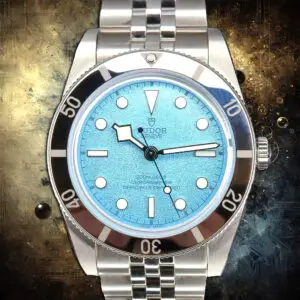
The Black Bay Fifty-Eight, launched in 2018, is a tribute to the classic Tudor divers of the 1950s. With its 39mm case, no-date dial, and slim profile, the Fifty-Eight captures the essence of vintage dive watches while offering modern reliability and performance. It is available in a variety of colorways, including the popular navy blue and the new burgundy with METAS certification.
Chronographs and Other Notable Models
The Montecarlo and Oysterdate Chronographs
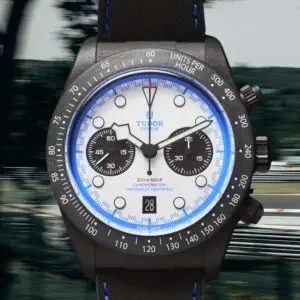
Tudor’s chronograph history began in 1970 with the Oysterdate, powered by a manually wound Valjoux 7734 movement. The second series, introduced in 1971 and nicknamed “Montecarlo” for its roulette wheel-inspired dial, featured the Valjoux 234 movement and a distinctive, colorful aesthetic.
The “Big Block” chronographs, launched in 1976, were the first Tudor chronographs to feature a self-winding movement. These models, with their robust cases and bold designs, have become highly collectible.
The Heritage Chrono and Modern Chronographs
In 2010, Tudor revived its chronograph legacy with the Heritage Chrono, a modern reinterpretation of the Montecarlo. The current Black Bay Chrono models, introduced in 2017, utilize the MT5813 movement developed in partnership with Breitling, offering a 70-hour power reserve, column-wheel chronograph mechanism, and COSC certification.
Read more about Tudor’s chronograph history on the official Tudor website.
The Ranger: Tudor’s Field Watch
The Tudor Ranger, first introduced in 1967, was inspired by the watches supplied to the British North Greenland Expedition in the early 1950s. The modern Ranger, relaunched in 2022 and expanded in 2025, features a heritage-focused design with a 36mm or 39mm case, matte black or “Dune White” dial, and the in-house MT5400 movement.
Explore the Ranger collection on the official Tudor website.
Introduction of In-House Movements and Manufacture Calibres
The Move Toward Autonomy
For much of its history, Tudor relied on third-party movements from ETA and other Swiss manufacturers. However, the brand’s pursuit of greater autonomy and technical excellence led to the development of in-house movements, beginning with the MT5621 in 2015.
Key Manufacture Movements
- MT5621: Debuted in the North Flag, featuring a 70-hour power reserve, silicon balance spring, and COSC certification.
- MT5612: Powers the Pelagos and Black Bay models, offering robust performance and reliability.
- MT5402 and MT5400: Developed for the Black Bay Fifty-Eight and smaller case sizes.
- MT5652: Introduced in the Black Bay GMT, adding a GMT complication.
- MT5813: A chronograph movement developed in partnership with Breitling, featuring a column-wheel mechanism and vertical clutch.
METAS Master Chronometer Certification
In recent years, Tudor has embraced the stringent METAS Master Chronometer certification, which requires watches to meet higher standards of precision, magnetic resistance, and water resistance. Models such as the Black Bay Ceramic, Black Bay Fifty-Eight GMT, and Pelagos Ultra now carry this prestigious certification, underscoring Tudor’s commitment to technical innovation.
Design Language and Signature Elements
The Evolution of the Tudor Logo
Tudor’s branding has evolved over the decades, reflecting shifts in the brand’s identity and focus. The original logo featured the Tudor rose within a shield, symbolizing the union of strength and grace. In 1969, the shield became the primary emblem, representing durability and protection—a theme that resonates in Tudor’s tool watches. Today, the shield logo adorns all Tudor watches, while the rose is used on winding crowns and select models as a nod to the brand’s heritage.
The “Snowflake” Hands: A Defining Feature
Introduced in 1969, the “Snowflake” hands are perhaps the most recognizable element of Tudor’s design language. Developed in collaboration with the French Navy to enhance legibility underwater, these angular hands have become a signature feature of Tudor’s dive watches and are instantly identifiable to enthusiasts.
Learn more about the evolution of the Snowflake hands on Crown & Caliber.
Materials and Technical Innovations
Tudor has demonstrated a willingness to experiment with materials and technical solutions, often ahead of its competitors:
- Titanium: The Pelagos was the first titanium watch in the Rolex group, offering lightweight strength and corrosion resistance.
- Bronze: The Black Bay Bronze introduced marine-grade aluminum bronze, which develops a unique patina over time.
- Ceramic: The Black Bay Ceramic features a monobloc ceramic case and METAS certification.
- Silver and Gold: The Black Bay Fifty-Eight is available in 925 silver and 18k gold, showcasing Tudor’s versatility in materials.
Military and Professional Partnerships
The French Marine Nationale and US Navy
Tudor’s longstanding relationship with the French Marine Nationale began in the 1950s, with the supply of Submariner models for evaluation and eventual adoption as standard-issue equipment. The collaboration influenced the development of key features, such as the “Snowflake” hands and square markers, and continues today with the Pelagos FXD, designed in partnership with the Marine Nationale for underwater navigation.
The US Navy SEALs and other military organizations have also relied on Tudor watches for their robustness and reliability, further cementing the brand’s reputation as a maker of professional-grade tool watches.
Modern Partnerships and Ambassadors
In recent years, Tudor has expanded its partnerships to include high-profile ambassadors such as David Beckham, Jay Chou, and the New Zealand All Blacks rugby team. The brand’s involvement in motorsport, cycling, and extreme sports reflects its adventurous spirit and broad appeal.
Brand Relaunch and Modern Marketing (2009–Present)
The 21st-Century Renaissance

After a period of relative obscurity in the late 20th century, Tudor underwent a major relaunch in 2009, introducing new product lines and a refreshed brand identity. The Grantour Chronograph and Glamour collection marked the beginning of this revival, followed by the Heritage Chrono and the game-changing Black Bay and Pelagos in 2012.
The “Born to Dare” Campaign
Tudor’s “Born to Dare” manifesto encapsulates the brand’s philosophy of blending heritage with innovation, embracing bold design choices, and pushing the boundaries of traditional watchmaking. The campaign, featuring ambassadors like David Beckham and Lady Gaga, has helped Tudor connect with a new generation of watch enthusiasts.
Global Expansion and Retail Strategy
Tudor has expanded its global footprint through a network of authorized dealers, boutiques, and mono-brand stores. The brand’s return to the US and UK markets in the 2010s, along with the opening of immersive boutiques in major cities, has strengthened its presence and accessibility.
Find a Tudor boutique near you.
Comparisons with Rolex: Positioning, Shared Components, and Divergence
Market Positioning
While Rolex remains the epitome of prestige and luxury, Tudor occupies a unique space as a mid-range brand that delivers remarkable craftsmanship, reliability, and value. Tudor’s willingness to experiment with materials, designs, and complications—such as bronze cases, “Snowflake” hands, and METAS-certified movements—sets it apart from its more conservative sibling.
Shared Heritage and Technical Overlap
Tudor and Rolex share a deep technical heritage, with Tudor benefiting from Rolex’s innovations in waterproof cases, self-winding movements, and manufacturing expertise. However, Tudor’s use of third-party movements (historically) and its focus on tool watches have allowed it to carve out a distinct identity.
Divergence and Independent Identity
The introduction of in-house movements, bold design choices, and a focus on value have enabled Tudor to emerge as a brand with its own voice and following. Today, Tudor is celebrated not merely as an “affordable Rolex” but as a maker of innovative, collectible, and highly respected watches in its own right.
Awards, Industry Recognition, and Critical Reception
Grand Prix d’Horlogerie de Genève (GPHG) and Other Honors
Tudor’s resurgence has been recognized by the watch industry’s most prestigious awards. The Heritage Black Bay won the “Revival” prize at the 2013 GPHG, while the Pelagos received the “Sports Watch” prize in 2015. These accolades underscore Tudor’s ability to blend heritage with contemporary innovation.
Critical Acclaim and Collector Enthusiasm
The Black Bay, Pelagos, and Fifty-Eight models have garnered widespread acclaim from critics, collectors, and enthusiasts alike. Tudor’s commitment to quality, design, and value has made its watches highly sought after on the primary and secondary markets.
Collectibility, Secondary Market, and Investment Trends
Vintage Tudor: Rising Demand and Value
Vintage Tudor models, particularly the “Snowflake” Submariners and military-issued watches, have seen significant appreciation in value. Collectors prize these watches for their historical significance, unique design elements, and connections to military and professional use.
Modern Tudor: Strong Value Retention
Modern Tudor watches, especially the Black Bay and Pelagos lines, offer strong value retention and are increasingly viewed as sound investments. Limited editions, special collaborations, and early models with unique features (such as the rose logo or “smiley” dials) are particularly desirable.
Auction Highlights
Tudor watches have achieved impressive results at auction, with rare models—such as the Black Bay owned by Tom Brady—commanding premium prices and attracting global attention.
Retail, Distribution, and Global Expansion
Authorized Dealers and Boutiques
Tudor’s watches are available through a global network of authorized dealers and dedicated boutiques. The brand’s expansion into key markets, including the United States, United Kingdom, and Asia, has been supported by immersive retail experiences and strategic partnerships with leading retailers.
Online Presence and E-Commerce
Tudor has embraced the digital era with a robust online presence, offering detailed product information, engaging storytelling, and e-commerce capabilities through its official website and select partners.
Recent Releases and 2024–2025 Product Highlights
Black Bay 58 Burgundy (2025)
The new Black Bay 58 in burgundy features a METAS Master Chronometer-certified movement, a 39mm case, and a five-link bracelet, blending vintage aesthetics with cutting-edge performance.
Pelagos Ultra (2025)
The Pelagos Ultra sets a new standard for professional dive watches with a 1,000-meter water resistance rating, titanium construction, and METAS certification. It represents the pinnacle of Tudor’s technical innovation.
Black Bay 68 and Chrono “Flamingo Blue”
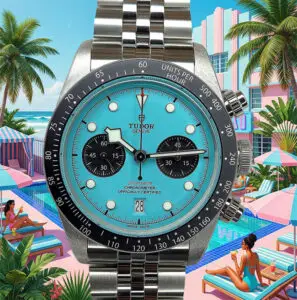
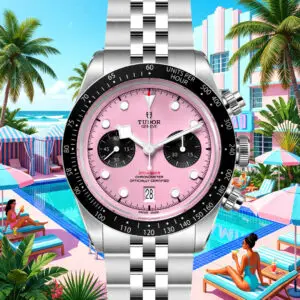
The Black Bay 68 introduces a larger 43mm case size with METAS certification, while the Black Bay Chrono “Flamingo Blue” offers a vibrant new colorway and advanced chronograph movement.
Expanded Ranger Lineup and 1926 Luna
The Ranger collection has been augmented with new sizes and dial options, while the 1926 Luna introduces Tudor’s first-ever moon phase complication, showcasing the brand’s versatility and creative spirit.
Explore Tudor’s latest releases.
Visual Assets: Iconic Tudor Watches
Below are high-quality images of some of Tudor’s most iconic models, illustrating the brand’s design evolution and enduring appeal.
A rare Hodinkee Tudor Black Bay owned by Tom Brady, previewed at Sotheby’s in December 2024. This image highlights the Black Bay’s status as a modern collectible and its association with high-profile figures.
Tudor Black Bay 58 watch belonging to Adrian Barker, founder of Bark and Jack, at his home studio near Glasgow, UK, May 2022. The Black Bay 58’s vintage-inspired design and versatile proportions have made it a favorite among enthusiasts.
Tudor Heritage Chrono Blue on display at BaselWorld 2018. The Heritage Chrono pays homage to the iconic Montecarlo chronographs of the 1970s, blending retro aesthetics with modern performance.
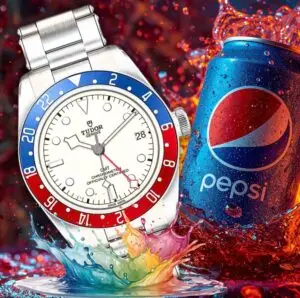
Tudor Black Bay GMT at BaselWorld 2018. The Black Bay GMT’s “Pepsi” bezel and in-house movement have made it a standout in the travel watch category.
Tudor Pelagos FXD, a modern professional dive watch developed in collaboration with the French Marine Nationale. The FXD’s fixed lugs, titanium construction, and military-inspired design underscore Tudor’s commitment to functional innovation.
Authoritative Sources and Further Reading
For those seeking to delve deeper into Tudor’s history, design, and technical achievements, the following high-authority resources are recommended:
- Hodinkee: Tudor Black Bay Buyer’s Guide
- WatchTime: Tudor Heritage and Chronograph Reviews
- Official Tudor Website
- Rolex Official Website
- Exquisite Timepieces: Tudor Reviews and Guides
- Monochrome Watches: History of the Black Bay
- Luxury Bazaar: Tudor Pelagos Collector’s Guide
- Crown & Caliber: Evolution of Tudor’s Snowflake Hands
History Still in the Making
Tudor’s journey from a pragmatic offshoot of Rolex to a celebrated innovator in its own right is a testament to the brand’s enduring commitment to quality, reliability, and design excellence. Through nearly a century of evolution, Tudor has balanced tradition with innovation, drawing on its rich heritage while embracing new materials, technologies, and creative directions. Signature models like the Submariner, Black Bay, Pelagos, and Ranger have become icons in their own right, beloved by collectors, professionals, and adventurers around the world.
As Tudor continues to expand its global presence and push the boundaries of watchmaking, it remains true to Hans Wilsdorf’s original vision: to offer watches that are “born to dare”—combining the best of the past with the promise of the future. Whether as a gateway to the world of luxury watches or as a destination for seasoned collectors, Tudor stands as a beacon of accessible excellence, innovation, and timeless style.
For the latest news, model releases, and in-depth features, visit Tudor’s official website and leading watch publications such as Hodinkee and WatchTime.
For current inventory of vintage and modern Breitling timepieces, please visit https://coastaltimepieces.com.